
What to Study This SPRING in Your Homeschool (Especially for Teens!)
Spring always does this to me.
Those first hints of spring wake me up. The extra sunlight fills my energy reserves. The cracked windows bring fresh air that fills my lungs. And everything feels a bit lighter.
Except school.
Between tests, a never-ending stack of reading, and geometry proofs that won’t prove themselves, middle & high school days can quickly turn into a grind.
When the kids are young, it’s easy to add in those Pinterest-style activities. Now, it’s harder to find ideas that are worth it. And even harder to fit them into already full days.
This list isn’t about adding more to your plate.
Rather, it’s about harnessing the idea behind those calendar-inspired activities. The curiosity, the unexpected, the connection. But without the crafts, fluff, or total overhaul of your day.
These ideas are:
- Designed for middle & high school students
- Easy to adapt for short chunks of time
- Built around real history, science, culture, and civics
- Flexible enough to work alongside your existing curriculum
- Inspired by the calendar

Irish-American Heritage Month
When: March
Between 1820 & 1860, ONE-THIRD of immigrants to the US hailed from Ireland. Today, more than 30 million Americans can find Irish roots. HALF of our presidents — 23 — have Irish ancestry. With numbers like those, it’s little wonder why we have an Irish-American Heritage month.
Make it easy by making some potatoes for lunch & watching a video about the Irish Potato famine while you eat. (Weird History, Geographics, or Ted-Ed). Or dive into Irish immigration, what it means to be part (or not part) of the British empire, or what it means for one island to be two countries.
Resources:
- Library of Congress Resources
- National Archives Irish-American Heritage Month Resources
- Irish Immigration: Beyond the Potato Famine
- When America Despised the Irish
- The Irish & Ellis Island
Crash Course Episodes: Immigrant Cities, Irish Renaissance, Revolutions of 1848
The Iditarod
Early March
The 51st running of the Last Great Race begins on March 4, 2023, in Anchorage. The Northern Trail (even-numbered years) and the Southern Trail (odd-numbered years) cover about 1000 miles each. Depending on what your teen is interested in, this would make a great topic for geography, the history of Alaska, dog care, or even a tie-in to study the northern lights or Russia.
While mostly geared toward elementary-age students, the education section on their website offers fantastic information.
Resources:
- Mush Dog Care
- Iditarod National Historic Trail
- Alaska & the Iditarod Race (a playlist I created)

March Mammal Madness
When: March 9 – April 1
We love a good NCAA basketball-style animal competition, so I was thrilled to come across March Mammal Madness hosted by Arizona State University.
Yes, your teen knows how to identify mammals & probably more than a few facts about a wide variety of them. But this competition isn’t dumbed down, and it doesn’t feature the mammals we all know. (Bumblee bat? Side-striped jackal? Greater rhea?!)
And a Spotify playlist just makes it even better.
Resources:
Get your brackets, Google research slides, and everything else you need to know over on ASU’s website.
What could your teen explore in just 10 minutes?
Because “Oh, that sounds fun” shouldn’t die in a Pinterest tab.
This 4-step mini-planner to go from an idea to a do-able plan.
It’s curiosity, planned.

National Poetry Month
When: April
By the time they are teens, your kiddos may have a strong aversion to poetry. Or they may love it. Either way, National Poetry Month is a perfect time to shake up their expectations around poetry.
Resources:
- Poetry 180 (180 poems chosen for the teen audience)
- The BreakBeat Poets: American Poetry in the Age of Hip-Hop
- 12 Poems to Memorize
- Create a piece (or two) of blackout poetry (adaptable for all ages)
- Watch a few videos from this National Poetry Month playlist
- Poem Generator (non-AI)
- Poem Generator #2 (non-AI)
- Mini-Bios of Edgar Ellen Poe, Walt Whitman, Geneviève Emy, William Blake, Phyllis Wheatley

US Enters World War I
When: April 6
Three years after it began, April 1917 would be the month the US formally joined in. President Wilson requested a declaration of war on April 2, the Senate supported it on April 4, and the House also voted for it on April 6.
Keep it simple by adding a novel, like Button War, or by watching All Quiet on the Western Front. Make your study more in-depth by reading a handful of interesting tidbit articles from the Imperial War Museum, or by exploring some of the reasons why the US waited so long to join the Great War.
Resources:
- 20+ World War I Resources (my round-up of books, videos, & more)
- The Music of World War I
- The Food of World War I: Eating in a Trench, Victory Recipes of the Great War, Bread: A Slice of War History
Paul Revere’s Ride
When: April 18
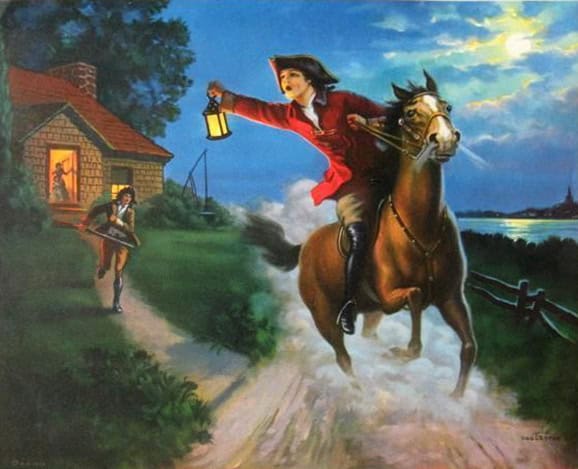
April 18, 1775, Paul Revere quickly mounted his horse & took off through the Massachusetts countryside toward the Old North Church. One if by land, two if by sea. The British troops were on the move. His ride became one of the most well-known moments leading up to the American Revolution.
If you want something that takes just a few minutes, read the Henry Wadsworth Longfellow poem or explore the Paul Revere House website. On the other end of the time spectrum, the new PBS American Revolution series is fantastic but clocks in at 12 hours! Creating a map of the route would be a good middle-of-the-road activity.
Resources:
- And Then What Happened, Paul Revere? (If your teen isn’t bothered by it being a kid’s book, this one is really good.)
- Johnny Tremain
- Paul Revere House
- Liberty! The American Revolution (older PBS series)
- The American Revolution (new PBS series, free if you have PBS Passport)
- Virtual tour of the Freedom Trail

“It’s easy to find Christmas magic with little kids. You’ll need a change in mindset & some creativity to find that magic with teens.“
Earth Day
When: April 20
Recycling, animals & plant life are easy topics to go along with Earth Day. But less obvious topics? People-led movements, animal conservation programs, or sustainability programs in other countries.
Take it local — teach your kiddos to write a letter to the city council, organize a clean-up day, etc.
Resources:
- Low-Prep Earth Day Ideas (a round-up of ideas)
- Earth Day Writing Prompts
- The First Earth Day: A Founder Remembers
- When the Movement Took Off
- Animal Conservation from TED Talks (US & around the world)
- Recycling Lessons from Around the World
National Park Week
When: April 22 – 30
Every year, National Park Week brings awareness of the parks & their purposes. (Bonus: It also comes with FREE entrance fees!)
The NPS lends itself to SO many rabbit trails. How does a national park become one? What’s the history of various parks? What animals live there? What animals or plants used to live there? Plan a road trip. Become a Junior Ranger from home. Etc, etc, etc.
Resources:
- Criteria for New National Parks
- The Near Impossible Process of Making a National Park
- 59 Fun Facts about the National Parks
- Our Great National Parks (Netflix)
President Wilson (created the NPS)
George Catlin (inspired the idea of the parks)
Do you have a fourth grader? They’re eligible for a free pass for a year through the Every Kid Outdoors program.
(Your family gets in free, too!)


Who turned out the lights?
When: mid-April (April 13-20, 2026)
International Dark Sky Week brings awareness to the issues of light pollution and nature. They have a few low-key activity ideas on their site. You could even go as simple as looking at the sky in your neighborhood & then drive further into the country to look.
Resources:
- TED Talks: Light Pollution & Dark Skies
- Death Valley at Night: Capturing the Night Sky w/o Light Pollution
- Light Pollution & Bird Migration
Seasonal Learning for Grown-Up Kids
Curiosity without the busywork.


International Jazz Day
When: April 30
Not even halfway through watching Disney’s Soul, I knew a mini-unit on jazz would be necessary. But what I envisioned — listening to some music, learning a bit about the musicians, and studying what else was going on in America at the time — was just the tip of the iceberg.
Because as we dove into it, I realized that the music was just the icing on a much more complex story. The Great Migration & Green Book Travel Guides. Segregation and ‘cancel culture’. Hope & love. An export of jazz music & culture to other countries. And the food!
An easy idea would be to save this Spotify playlist and play it throughout April. After my boys watch the news each morning, they watch a video or two from a themed playlist I’ve created. 10-15 minutes is usually easy to find in your day — in the car, as you eat lunch, etc. Watching a video from YouTube about the places & sounds of jazz can be done then.
Resources:
- Jazz: More Than Music playlist (locations, musicians, and more)
- Jazz Lesson Plans from the Smithsonian Museums
- The Great Migration from Crash Course
- A Jazz Journey Around the World
- Birth of Cool: How Miles Davis Found His Cool (a picture book, but enjoyable to older kids)
- Read a collection of jazz poetry
- Jazz in America lesson plans
- Another collection of Jazz lesson plans (history, language arts, & more)
Transcontinental Railroad
When: May 10
On May 10, 1869, the final spike was driven at Promontory Summit, Utah, completing the Transcontinental Railroad and connecting the eastern and western United States for the first time. What had once been a months-long journey across the country could now be done in about a week. The railroad reshaped trade, travel, and communication — but it was built through dangerous conditions by thousands of workers, including many Irish and Chinese immigrants, whose stories are often overlooked.
Did you know? The first subway was completed just 30 years later in Boston.
If you want to keep it really simple & short, watch this 7-minute movie from the Golden Spike National Historical Park. Google Arts & Culture is a one-stop shop for all sorts of interactive and interesting exhibits. Beyond the Tracks includes maps, art, original blueprints, train station exploration, and more. It’s one of our favorite resources to explore one topic in a variety of ways.
Resources:
- Read Nothing Like It in the World
- Look at the original plans from 1849
- Explore resources from Golden Spike National Historical Park
- Interactive map of key sites
- Virtual Field Trip on the Transcontinental
- Watch Breaking Ground (early Asian immigrants, including those who worked on the railroad)
What could your teen explore in just 10 minutes?
Because “Oh, that sounds fun” shouldn’t die in a Pinterest tab.
This 4-step mini-planner to go from an idea to a do-able plan.

About Tricia
Tricia is a 40-something mom to three. She loves Netflix, people, and laughter. And she firmly believes that homeschooling should include all three.
After years of ‘doing life’ — homeschooling, military life, homemaking — like others, she’s charting her own way… and loving it!
Don’t Miss These


When you buy through links on my site, I may earn an affiliate commission. My goal is to keep this site 100% reader-supported and free of ads or sponsorships. Your purchases help me make this possible. Thank you! Read more here.