
10+ Christmas Science Experiments for Middle School Kiddos
There are so many opportunities for winter science fun. These science activities are perfect for middle school students.
With young kids, the internet abounds with fun science experiments every holiday season.
Christmas is a great time to change up your science regimen. Adding in fun science experiments that make use of the Christmas season is a great way to expand their knowledge of the holidays and bring in some of that Christmas joy that came naturally when they were little.
As my kiddos have grown, though, the appeal of many of them doesn’t hold as much interest. And frankly, I can’t justify the time off to skip our regular material when the payoff is mostly entertainment rather than educational. But these Christmas & winter science activities, though, are chosen with middle school students in mind.
Many of these easy science experiments are ones that your kiddos can do independently. Pick ones that don’t require the use of the kitchen for a great way to keep them occupied while you make dinner. They also make for a great addition to your winter break — when you’re all a bit stir-crazy from the lack of routine.
(If you have high school students or young children, don’t rule these out. They can be beefed up or used as a quick ‘bell ringer’ for older kids. With more guidance from you, younger kiddos can enjoy many of them, too.)
As always, use caution and supervise!!

Aren’t some of these activities pretty basic??
Middle school kiddos probably have some of these before and can probably predict what’s going to happen, yes. But…
- Easy science experiments are a great starting point for learning the skills of writing lab reports.
- Make them an activity for the entire family. Choose one or two days a week to do one after dinner. If you’re really ambitious, count down to Christmas by doing fun Christmas science experiments every evening. What a memory that will create!
- Use it as an opportunity to practice independent science skills & precise measurement and note-taking.
- Even when they are predictable, Christmas science projects are a fun way to easily engage kids in science, spark curiosity, and make a great ‘bribe’ for finishing the “real” work.
- And I’ve included extension ideas to ‘beef up’ the topic and extend their learning. These videos & articles can be used for independent learning, but, especially the videos, are great to share as a family.
- Quick & easy may be just what you need to actually get.it.done.
- Easy Christmas science experiments can also be an easy way to help kiddos learn to write a good hypothesis, as well as predictions when slight changes are made to the supply list (change in temperature, different size containers, etc.)
- Kids of all ages can get in on the fun, not just your middle school kiddo.

Sweet Christmas Science Experiments
1. The Classic Gumdrop Challenge
A great activity for multiple ages is the gumdrop challenge Give older students more specifics about their attempts (such as varying the number of materials they can use, what their structure needs to be able to do, or how tall it must be) while younger kids can simply use their toothpicks & gumdrops to discover the physics on their own.
Supplies
- gumdrops or mini-marshmallows
- lots of toothpicks
How Strong Buildings Are Made
2. Dissolve Those Candy Canes
What liquids will dissolve candy canes? A dissolving candy cane science experiment is a fantastic one to practice the scientific method with middle schoolers. Their minds can run wild with ways to tweak it, so it can be done multiple times in December.
In this activity, kids place one candy cane inside each jar or glass. Take 1 cup of one of your liquids & add it to the first jar. Repeat for the different liquids. Don’t walk away from this activity — change can happen quickly!
Supplies
- candy canes (miniature or regular size)
- jars or glasses
- Variety of liquids (hot water, cold water, vinegar, milk, salt water, soda, etc.)
More Candy Cane Activities
- Candy Canes! How It’s Made
- Dissolving Candy Canes: Saltwater vs Sugar water
- 12 Candy Cane Experiments
- Make your own candy canes
- Swap out the candy canes for gingerbread men cookies.
Overrun with candy canes? Check out these ideas to use them up.

3. A Little Cookie Mystery
Case #1225 Case of the Christmas Cookie Mystery will be perfect for my middle-schooler this year because her science is Chemistry in the Kitchen!
Supplies
- Case #1225 lab packet
- 1 container per powder
- White powders (baking soda, baking powder, corn starch, flour, powdered sugar, baby powder)
- 3 bottles & droppers (water, vinegar, iodine)
- Toothpicks
- Wax paper & aluminum foil
- Tweezers or tongs
- Small candle & matches
4. Candy Chromatography
Play around with candy and dyes with candy chromatography.
Supplies
- Paper towels
- Large bowl & jars
- Salt
- Medicine dropper
- M&Ms or Skittles
- Food coloring
Learn about Chromatography

The Science of Christmas Trees Activities
5. How do trees stay fresh?
How do you keep a fresh Christmas tree looking great all month long? Experiment with different variables to see which one keeps a Christmas tree freshest the longest.
Supplies
- Small branches of evergreen, about 4″ long (A tree stand may have pieces for you or cut from your own Christmas tree.)
- Quart jars with lids
- Vases for your cuttings (jars or drinking glasses)
- Various liquids (water, vinegar, corn syrup, bleach)
Learn more about Christmas trees
- The Science of Christmas Trees
- Christmas Tree Farm
- Warm-season prescribed burns
- Are Christmas Trees a Holiday Hazard?
- Sparking love for science by studying how Christmas trees burn
6. Acids, Bases, & Poinsettias
Explore acids, bases, and pHs with homemade poinsettia PH paper. Don’t be scared off by the suggested chemicals; you don’t have to use them. If you google ‘acids & bases PH paper’, you’ll find all sorts of suggestions.
Supplies
- Beaker or cup
- Scissors
- Scissors or a blender
- Filter paper or coffee filters
- Various acids & bases to test (vinegar, lemon juice, baking soda solution, distilled water, soda, etc.)
Learn more about acids & bases
7. Open up, pine cones!
What makes pine cones open? We’re in the land of pine trees here in my part of North Carolina, so pinecones make for easy science activities!
While this activity uses 3 set-ups: warm water, cold water & the control group (air), you could expand this by utilizing different temperatures of water (boiling, simmering, tap warm, tap cold, fridge cold, etc.)
Supplies
- Pinecones
- 1 container per pine cone
- Warm & cold water
Learn about pinecones
Pinecones close when it rains, here’s how
In response to weather: the opening & closing of pinecones
Doodling in Math: Science & Fibonacci (video)
Excellent Evergreens (video)
Can leaves predict rain?
Pinecones: A tool to survive
8. Color-Changing Pinecones
Make color-changing pinecones.
Supplies
- Large bucket
- Pinecones
- Tongs or slotted spoon
- Flame colorants such as table salt, borax or Epsom salt (see the link above for details)
How do fireworks work?
The science of firework colors (video)
Everything you need to know about the science of fireworks
Fun Christmas STEM Activities
9. Christmas Circuits
We love Snap Circuits, so the ideas of Christmas-themed circuits, like Circuit Christmas Trees or DIY light-up Christmas cards, are right up our alley.
Supplies
- LED Lights
- Insulated copper wire
- Watch Batteries
- Electrical tape
- Clothespins
- Pipe cleaners
- Scissors
Learn more about circuits
How do circuits work
Explaining electrical circuits (video)
Snap Circuits
The power of circuits (video)
Ask History: Ben Franklin and his Kite (video)
10. Santa’s Getting a New Sleigh
Designing a new sleigh for Santa is another activity that could work for multiple ages. These STEM challenges use craft sticks, balloons, etc. While there are loads of design options out there, here are two: Science Sparks and Mrs. Willyerd
You could also adapt the egg drop challenge to include an attached sleigh.
Or help Santa ditch the sleigh & ride a rocket instead. (This will need adapting for an older audience.)
Supplies
- Santa toy (Lego, small figurine, etc.)
- Construction materials like craft sticks, cardboard, etc.
- Connectors (tape, pipe cleaners, glue, etc.)
Learn more about the science of Santa Claus
Santa’s Poorly-Designed Aerodynamic Sleigh!
The science of Santa and his sleigh
Christmas Ideas from Teachers Pay Teachers
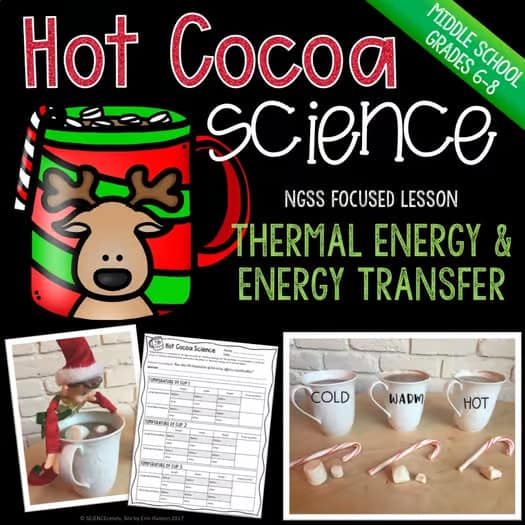
Teachers Pay Teachers is my favorite place to shop when I want simple science activities. There are so many choices! And it’s a good reminder of how easy it can be to switch out a regular lesson with something seasonal. Grab a snowman punnet squares activity, for example, if you have a kiddo studying genetics.




The Science of Snow
Fake It!
When we lived in Hawaii, my kiddos made sand angels on the beach. They had never touched snow, so they had no idea what they were missing. A fake snow recipe would have been so much fun, even if I couldn’t have made enough for them to make snow angels in!
There are many fake snow recipes, each one claiming to be the best. This is your kiddo’s opportunity to use the scientific method to try various combinations until they find their favorite. Before they begin, encourage them to think about all the qualities of snow — texture, temperature, etc — and what is most important to them (hold together for a snowball vs light & airy to the touch, for example).
The recipe we used last year was 1 part cornstarch to 1 part baking soda & enough water to make it hold together in our fists but crumble when pushed. Exact, eh?? It depends on the humidity, etc. in your home, though. Our first batch was 1/4 cup each of cornstarch and baking soda + 1 tablespoon of water. We started with 1 teaspoon of water and added 1/2 teaspoon at a time until it reached the right consistency. I’d suggest you do the same.
Once you’ve brainstormed snow qualities & made a first batch, check out this list of 5 other fake snow recipes. And then get testing!
Supplies
- cornstarch
- baking soda
- water
- Optional: white lotion, white conditioner, white shaving cream
- Optional play items: cookie cutters, plastic knife & spoon, etc.
Learn about the science of snow
- How do snow form? And how does it affect wildlife?
- Snowflakes: How do they form? Why are they six-sided?
Looking for even more ideas?
- Even though the activities on Little Bins for Little Hands are geared toward younger kiddos, they can be fun for older kiddos, too. (Some may need a little adaptation.) And if you have a range of kiddos, these ideas make for a fun activity for everyone.
- Making candy cane slime isn’t middle school-level difficulty, no, but even they will love it. Or try this recipe for gingerbread slime.
- Check out this book of ideas from Elemental Science, which includes 25 hands-on activities plus ideas for winter nature studies. (This version even includes the supplies you’ll need.)
Don’t Miss These


When you buy through links on my site, I may earn an affiliate commission. My goal is to keep this site 100% reader-supported and free of ads or sponsorships. Your purchases help me make this possible. Thank you! Read more here.