
12 Winter Historical Events to Study This Winter
What happened in winter? Add something new to your history with this 12-day unit that explores historical events that happened in the winter.
I enjoy sharing ‘On This Day’-type of stories with my kids. It gives us a mini-history lesson and, sometimes, leads to learning more about the topic, finding it on a map, etc. But I don’t always want to commit to some drawn-out activity. I want to introduce the topic, perhaps do a short extension, and then BE DONE WITH IT!
{Do you ever feel like you need to give yourself permission to not make something big out of a study? I do! Sometimes I feel that I must include map work, living books, and a craft, or I’ve taken the lazy way out. You have my permission! And that’s exactly why I’ve created this download.}
I’ve chosen 12 historical events that you can do that with, as well. You could study these as just 12 independent events, a sort of mini-history lesson. If you have a morning basket, you could incorporate the events into that. I tried to incorporate a variety of resources, so you can go over each event in less than 10 minutes or you can go much longer.

A Christmas Truce
It started one Christmas Eve. The sounds of Christmas carols drifted over no-man’s-land. Two languages, two sides of the war, one desire for a moment of peace amidst relentless violence.
In the light of Christmas Day, there was peace across much of the Western Front for a brief time. Soldiers from Germany & England ate together, played soccer, and exchanged souvenirs. They grieved together as they had joint burial ceremonies and exchanged prisoners.
December 26 brought a return to fighting, more men dying too young. But for those who experienced this truce, the memory would last.
In 1915, some Christmas truces were declared, but the high commands prohibited them. By 1916, there were no more truces.
Resources
Christmas in the Trenches {One of our favorite World War 1 books.}
Truce
The story of the WW1 Christmas Truce
Christmas truce football statue in Liverpool
Victory or Death: Washington Leads the Way

“Victory or Death” was the password for the chilly night of Christmas 1776 when George Washington led his famous troop crossing across the Delaware River. They landed in Trenton, New Jersey, three hours behind Washington’s schedule.
Once across, they marched four hours to capture 1,000 Hessian soldiers in a surprise attack. After defeating the Hessian troops, Washington led his troops back across the river, this time with prisoners and supplies taken during the battle. They would return a third time on January 2, 1777, to defeat British reinforcements led by Lord Cornwallis, before proceeding to their winter quarters in Morristown, New Jersey.
Did you know? James Monroe, the future president, crossed with the American forces and was wounded during the Battle of Trenton. A musket ball struck his left shoulder & severed an artery.
Resources:
Cobblestone October 2013
Audio tour clip from The Met about the painting
The Winter Patriots: A Revolutionary War Tale {produced by Mount Vernon}
Battles of Trenton & Princeton
George v. George: The American Revolution as seen from both sides
Biography of Emanuel Leutze
A New View

Christmas Eve 1968 brought a memorable night to Earth when Apollo 8 astronauts broadcast while hovering over the moon’s surface, reading from Genesis and producing the famous Earthrise image.
On December 21, Frank F. Borman, James Lovell Jr., and William A. Anders blast off from the then-new Kennedy Space Center. Ahead of them was a distance no man had ever gone — the orbit of the moon. (They’d orbit 10 times.)
Apollo 8 was the first manned spacecraft to leave the Earth’s orbit, the first to orbit the moon (and see the far side of it with their own eyes) and re-enter the Earth’s orbit. It was also the first to launch from the then-new Kennedy Space Center.
Upon their return, Time magazine would name them 1968’s Men of the Year. A fitting end to a very tumultuous year.
Resources:
Apollo 8: Christmas at the Moon {by NASA}
Apollo 8’s Christmas Eve 1968 Message
Simulation of the famous EarthRise photo
Remembering the Apollo 8 Christmas Eve message
Newsweek’s 1968 Apollo 8 coverage
The Daring Adventure of Apollo 8
To the Ends of the Earth

Exploration of the North Pole and the South Pole, beginning in the early 20th century, drew many men and women to go where no one had gone before.
In 350 BC, the Greeks, who already knew about the Arctic, first suspected that the earth needed an opposite to balance it. ‘Arktos’ (The Bear, from the constellation) and ‘Ant-Arktos’ (opposite The Bear) were the names they gave the locations.
On January 17, 1773 – Resolution and her captain, James Cook, became the first vessel to cross the Antarctic Circle.
And the first sighting? Well, that wouldn’t happen until January 1820. And the first person to sight it? That depends. If you ask Thaddeus von Bellingshausen, he’ll say he saw “an ice shore of extreme height.” And if you ask Edward Bransfield, he’ll tell you about the snow-topped mountains he saw.
Resources
Journey to the North Pole, Cobblestone April 2009
Helen Thayer’s Arctic Adventure: A Woman & a Dog Walk to the North Pole
Bound by Ice: A True North Survival Story {Story of the USS Jeanette}
Lesson Learned: Don’t fly to the North Pole in a Balloon
Who Discovered the North Pole? Did Cook beat Peary?
Independence: Gained
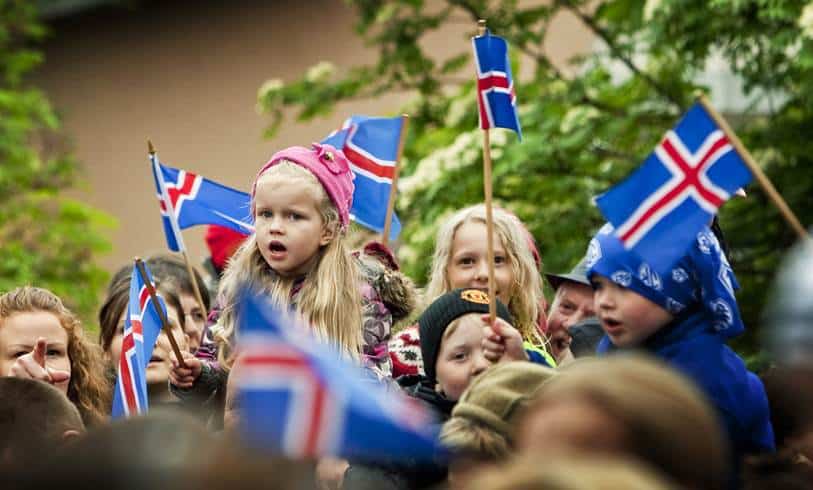
On December 1, 1918, Iceland gained its independence from Denmark. They created their own flag and declared their neutrality. Located 300 kilometers from Greenland and 1001 kilometers west of Norway, this country of 300,000 sits isolated. Culturally, Iceland associates itself with Europe, and the first people thought to have lived there were Irish monks. They remained under the king of Denmark, though, until June 17, 1944.
Located in the Pacific & Indian Oceans and spanning over more than 13,000 islands lies Indonesia. Indonesia gained its independence from the Dutch on December 27, 1949. They continued to formally associate with the Netherlands for another five years.
And in 1929 Benito Mussolini granted independence to Vatican City on February 11. He also recognized the sovereignty of the Pope over the 110-acre area that sits inside Rome, Italy. Just 1/8 the size of NYC’s Central Park, Vatican City is the smallest country in the world.
Resources
Official Iceland Travel Office
Iceland (True Books)
Life on Surtsey: Iceland’s Upstart Island
Only 4 Hours of Sunlight: Iceland’s Shortest Day
Unique Iceland
Stopping Cities Cold
More than 26 feet of snow fell in Iran in 1972 entirely covering 200 villages. Arriving early and leaving late, Winter of 1880 brought blizzard after blizzard (as memorialized by Laura Ingalls Wilder. Up to six feet of snow fell on Afghanistan in 2008, dropping temperatures to -33 C and killing almost a thousand people.
A blizzard is defined as a severe snowstorm with winds in excess of 35 mph and visibility of less than a 1/4 mile for more than 3 hours. They usually develop on the northwest side of a storm system when warm air & cold air mix.
The deadliest US blizzard was in 1888, with more than 400 people killed. 40-50 inches of snow fell in the northeast, burying houses and trains and causing more than 200 ships to sink.
Ask your parents what they remember about the Storm of the Century/Great Blizzard of 1993.
Resources
Digital Snow Museum
1972 Iran Blizzard (skip ahead to 6:16)
Deadliest Blizzard in History
Hard Winter of 1880-1881, The Dakota Territory
De Smet, Dakota Territory, Little Town in the National Archives
The Long Winter of 1880-81: What was it really like?
The Long Winter (Little House)
The Winter Olympics
In January 1924, sixteen countries gathered in Chamonix, France, for the first Winter Olympics. Three years after the idea was suggested, 16 events were completed by 258 athletes (just 11 were female). A year later, in May 1925, the IOC officially named the event the First Olympic Winter Games.
Charles Jewtraw won the first gold medal for speed skating. Thorleif Haugh, from Norway, would win a gold medal in three different skiing events. Jacob Tullin Thams, another Norwegian skier, medaled at both the winter & summer Olympics (ski jumping & sailing). And, from the very first Winter Olympics, Canada dominated hockey.
In 2022, 80 countries will participate in the Winter Olympics. Haiti will make its inaugural debut with one skier competing in Alpine Skiing. About 3000 athletes will compete in 109 events over 15 days. Beijing will again play host to the Olympics.
Resources
First Skating Champion of the Winter Olympics
History and Symbols of the Olympics
The Official Olympic record of the 1924 Winter Olympics
The Great London Smog
On Friday, December 5, 1952, the Great Smog of London settled in and would last for four days. A high-pressure weather system stalled over England with warm high air trapping cold air at the ground.
A “perfect storm” of cold weather, windless conditions, and airborne pollutants (mostly from the use of coal) left more than 10,000 dead (long-term) and 100,000 people ill.
This wasn’t the first time London had been covered in smog. After the Industrial Revolution, it happened many times. The East End, dense in factories, suffered the worst.
In 1956, Parliament created a Clean Air Act, restricting coal burning in urban areas. (Over the next 25 years, more than 30 other countries would also sign onto the Clean Air Act.) The city slowly transitioned to oil, gas, and electricity. Goodbye, smog!
Resources:
The Fog That Killed 12,000
The Great Smog Attack of London
Weather History: Great Smog of 1952
The Winter War
Trenches were dug, white uniforms were donned, skis were mounted. The Finns were as ready as they could be. Their enemy? An army twice its size — the Soviet Red Army.
Finland had refused to move their border back
16 miles to create a buffer around Leningrad. Fearing an attack by Hitler, Stalin also wanted Finnish territory for a naval base.
Led by Marshal Carl Gustaf Mannerheim, the Finnish army was well-organized and stocked with ammunition, food, and other supplies.
Ultimately, they were no match for the much larger army. In March 1940, Finland gave 11% of its land over to the Soviet Union. In the end, the Soviets lost more than 300,000 men, and the Finns lost 65,000.
Resources
Winter War: Death in the Snow
What Was the Winter War?
The Winter War {by Simple History}
Standing on the Shoulders of Giants
January 4, 1643, brought the birth of one of the greatest scientists and mathematicians, Issac Newton.
Issac Newton would go on to create the modern telescope and make discoveries in optics, mechanics, and mathematics.
He died in London in 1727 and was the first scientist to be honored with burial in Westminster Abbey.
Did you know?
- Newton has two birthdays — Jan 4 and, when adjusted for the calendar of his time, Christmas Day!
- An apple never fell on his head.
- In honor of his work at the Royal Mint, he has his own coin — a 50p created in 2017.
- Newton never married & had few friendships.
Resources
Issac Newton biography
Secret Life of Issac Newton
Newton’s Laws
Who Was Issac Newton?
Issac Newton & Physics for Kids: His Life and Ideas with 21 Activities
2004: The Deadliest of Tsunamis
December 26, 2004, just off the coast of Sumatra, Indonesia, an earthquake occurred under the Indian Ocean. A magnitude of 9.1 was one of the largest ever recorded and would last up to 10 minutes. The tsunami it would set off was the biggest in more than 40 years. Within 15 minutes, the first waves were striking land.
The city of Banda Aceh on the northern tip of Sumatra was closest to the powerful earthquake’s epicenter and the first to receive the mighty waves — 1/3 of this city of 320,000 would perish.
Waves traveling up to 500 mph would spread to 13 other countries (Thailand was second). In its trail, it would leave more than 230,000 people dead.
(Prescreen any videos you watch on the 2004 Tsunami. There are some pretty graphic, heart-aching videos out there. The videos by news stations seemed to be the best during my research, though even some of those may be too much.)
Resources
Tsunamis (A True Book)
Asian Tsunami & How they Happen {by CBS News}
How Big Do Tsunamis Get?
BBC Special Report 12/26/04
Tsunami simulation
How tsunamis work
I Survived the Japanese Tsunami, 2011

About Tricia
Tricia is a 40-something mom to three. She loves Netflix, people, and laughter. And she firmly believes that homeschooling should include all three.
After years of ‘doing life’ — homeschooling, military life, homemaking — like others, she’s charting her own way… and loving it!
Don’t Miss These


When you buy through links on my site, I may earn an affiliate commission. My goal is to keep this site 100% reader-supported and free of ads or sponsorships. Your purchases help me make this possible. Thank you! Read more here.